Next-Generation Sequencing Data Analysis: A Practical Introduction
Quality Control, Read Mapping, Visualization and Differential Expression Analysis

Link to workshop website
When?
26 - 28 June 2017
Where?
Frankfurt, Germany
In a nutshell
Scope and Topics
The purpose of this workshop is to get a deeper understanding in Next-Generation Sequencing (NGS) with a special focus on bioinformatics issues. Advantages and disadvantages of current sequencing technologies and their implications on data analysis will be discovered. The participants will be trained on understanding their own NGS data, finding potential problems/errors therein and finally perform their first downstream analysis (differential gene expression). In the course we will use a real-life RNA-seq dataset from the current market leader illumina.
Key dates
Opening Date of Registration: 1 February 2017
Closing Date of Registration: 1 June 2017
Workshop: 26 - 28 June 2017 (9 am - 5 pm)
Registration Fee: 898 EUR (excluding VAT)
[URL="http://www.ecseq.com/workshops/workshop_2017-03-NGS-Next-Generation-Sequencing-Data-Analysis-A-Practical-Introduction[/URL]
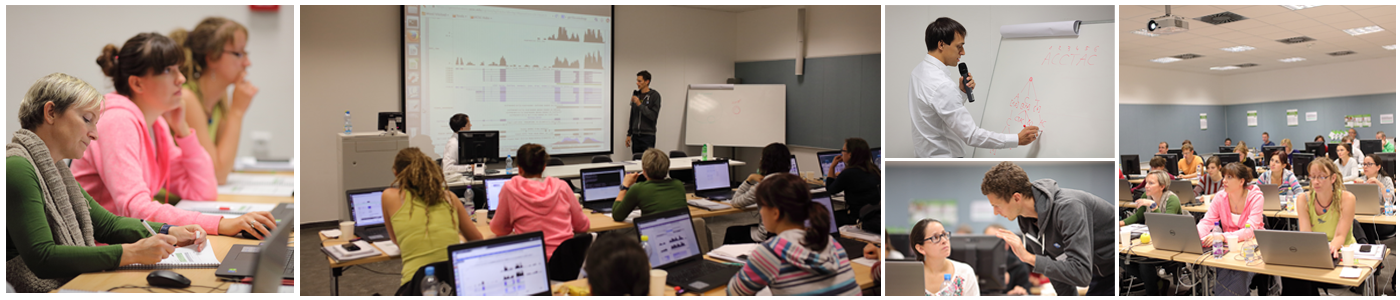
Quality Control, Read Mapping, Visualization and Differential Expression Analysis
Link to workshop website
When?
26 - 28 June 2017
Where?
Frankfurt, Germany
In a nutshell
- Learn the essential computing skills for NGS bioinformatics
- Understand NGS technology, algorithms and data formats
- Use bioinformatics tools for handling sequencing data
- Perform first downstream analyses and find differentially expressed genes
Scope and Topics
The purpose of this workshop is to get a deeper understanding in Next-Generation Sequencing (NGS) with a special focus on bioinformatics issues. Advantages and disadvantages of current sequencing technologies and their implications on data analysis will be discovered. The participants will be trained on understanding their own NGS data, finding potential problems/errors therein and finally perform their first downstream analysis (differential gene expression). In the course we will use a real-life RNA-seq dataset from the current market leader illumina.
Key dates
Opening Date of Registration: 1 February 2017
Closing Date of Registration: 1 June 2017
Workshop: 26 - 28 June 2017 (9 am - 5 pm)
Registration Fee: 898 EUR (excluding VAT)
[URL="http://www.ecseq.com/workshops/workshop_2017-03-NGS-Next-Generation-Sequencing-Data-Analysis-A-Practical-Introduction[/URL]