Unconfigured Ad

Collapse
X
 
  • Time
  • Show
Clear All
new posts
  • SDPA_Pet
    Senior Member
    • Apr 2013
    • 222

    #1

    Illumina output questions

    Hello, I am gonna do some Illumina 2X300bp amplicon sequencing. I suppose the platform (MiSeq) will run 600 cycles and time fixed. I just recently notice on the official website
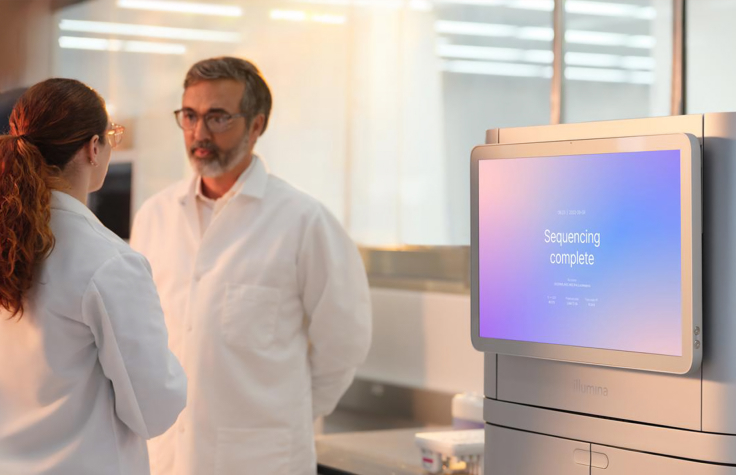
    Compare next-generation sequencing (NGS) platforms by application, throughput, and other key specifications.


    It says the running time is 4–55 hours? It seems to me that the running time range is quite large? What's the difference if you run 4 hours or 55 hours. some questions:

    1>Let's both 4 hours and 55 hours will give same length of reads.(In my case is 300bp). However, 55 hours will generate more reads (total number) than 4 hours.

    2> Or 4 hours will give you shorter reads (e.g., 100bp) and lower number of reads.

    3>Would 4 hours and 55hours running time used same protocols and same amount of regents?

    4>Do you know how long normally a sequencing center will run? I would like them to run longer? Would be cost more? How should I tell them? Just simply say run as long as you could?

    Thanks,
    Ben
  • Meyana
    Member
    • Sep 2017
    • 40

    #2
    The time of run will depend on the read length.

    Check this link for run times for different read lengths:

    Comment

    • microgirl123
      Senior Member
      • Jun 2012
      • 199

      #3
      The number of reads (molecules sequenced, also called clusters) is determined by the concentration of library added. There is an optimal number the sequencing center will be aiming for depending on the type of library you have.

      The length of the reads is determined by the kit you decide to use. If you have an insert between your Illumina adapters of 600 bp, you could use a 600 cycle kit and read 300 bp in each direction. You could not use a 600 cycle kit with an insert size of 50 bp, since you would be reading far past the end of your insert into the Illumina adapter and flow cell.

      The amount of time a MiSeq run takes is dependent on the length of the reads. Library hydridization and cluster formation takes a couple of hours. After that each read (cycle) takes around 5 minutes. So a 4 hour run is likely just 2x25 bp. A 55 hour run would be the full 300x300 bp run. The cost of the run is dependent on how many cycles you want performed - 2x25 bp kits contain less reagents and are cheaper than 2x300 bp kits.

      Comment

      • GenoMax
        Senior Member
        • Feb 2008
        • 7142

        #4
        @Ben: MiSeq nano flowcells produce a small amount of data and can run astonishingly quickly. That 4 h figure is for one of these FC with a short 50 cycle run. These FC only produce about 1-1.5M reads and they are mainly good for QC of libraries for larger NovaSeq runs or cases where one needs small amount of data/quick turn-around.

        Don't worry about the run times you have no control over those. Select the length of sequencing you need and that should be it.

        Comment

        Latest Articles

        Collapse

        • SEQadmin2
          Beyond CRISPR/Cas9: Understand, Choose, and Use the Right Genome Editing Tool
          by SEQadmin2


          CRISPR/Cas9 sparked the gene editing revolution for both research and therapeutics.1 But this system still showed severe issues that limited its applications. The most prominent were the heavy reliance on PAM sequences, delivery limitations, double-stranded breaks that prompt unintended edits and cell death, and editing inefficiency (both in targeting and in knock-in reliability).

          Despite this, “CRISPR helped turn genome editing from a specialized technique into
          ...
          07-31-2026, 11:01 AM
        • SEQadmin2
          Proteomic Platforms: How to Choose the Right Analytical Strategy to Improve Detection and Clinical Applications
          by SEQadmin2


          Proteomics platforms are evolving rapidly, with advances in mass spectrometry and affinity-based approaches expanding what researchers can detect and at what scale. As the field moves toward deeper proteome coverage and clinical applications, scientists face an increasingly complex landscape of tools. This article will explore how researchers are navigating these choices to find the right platform for their work.

          The systematic characterization of the human proteome has
          ...
          07-20-2026, 11:48 AM

        ad_right_rmr

        Collapse

        News

        Collapse

        Topics Statistics Last Post
        Started by SEQadmin2, 08-13-2026, 12:22 PM
        0 responses
        20 views
        0 reactions
        Last Post SEQadmin2  
        Started by SEQadmin2, 08-11-2026, 10:35 AM
        0 responses
        16 views
        0 reactions
        Last Post SEQadmin2  
        Started by SEQadmin2, 08-06-2026, 07:41 AM
        0 responses
        32 views
        0 reactions
        Last Post SEQadmin2  
        Started by SEQadmin2, 08-03-2026, 10:13 AM
        0 responses
        50 views
        0 reactions
        Last Post SEQadmin2  
        Working...