 9th Programming for Evolutionary Biology Course - March 2-18 2020 in Berlin, Germany
Course on Programming for Evolutionary Biology
When: March 2nd - March 18th 2020
Location: Berlin, Germany
Application deadline: October 25th 2019
Detailed information about the course content and how to apply: http://evop.bioinf.uni-leipzig.de/
In this intensive 17 days course, students will learn how to survive in a Linux environment, get hands-on experience in two widely used programming languages (Python and R), and statistical data analysis. The classes will be given by experts in the field and consist of lectures and exercises with the computer. The aim of the course is to provide the students with the necessary background and skills to perform computational analyses with a focus on solving research questions related to genomics and evolution. The philosophy of the course will be “learning by doing”, which means that the computational skills will be taught using examples and real data from evolutionary biology for the exercises. During the course, students will also propose projects of their own interest and perform them as final projects in small groups under the supervision of a teaching assistant. This summer school is open for students from all countries and targeted toward PhD students and postdocs of evolutionary biology or related research fields with no or little programming experience who want to become proficient in computational evolutionary biology in a couple of weeks.
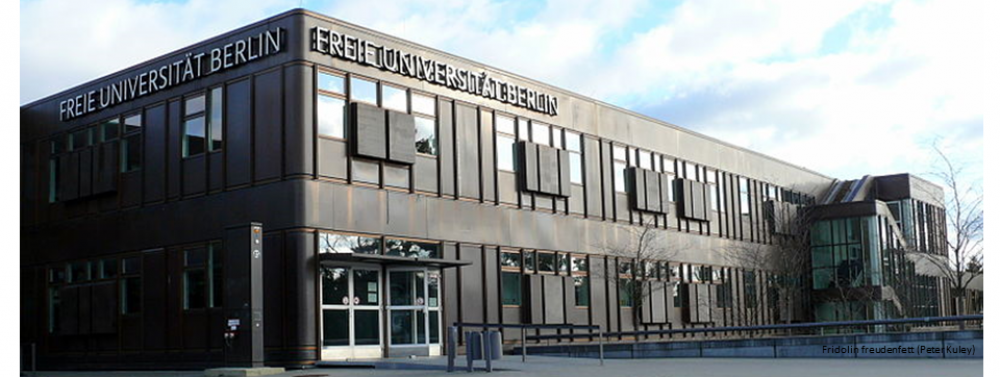
The course takes place at the Free University of Berlin.
When: March 2nd - March 18th 2020
Location: Berlin, Germany
Application deadline: October 25th 2019
Detailed information about the course content and how to apply: http://evop.bioinf.uni-leipzig.de/
In this intensive 17 days course, students will learn how to survive in a Linux environment, get hands-on experience in two widely used programming languages (Python and R), and statistical data analysis. The classes will be given by experts in the field and consist of lectures and exercises with the computer. The aim of the course is to provide the students with the necessary background and skills to perform computational analyses with a focus on solving research questions related to genomics and evolution. The philosophy of the course will be “learning by doing”, which means that the computational skills will be taught using examples and real data from evolutionary biology for the exercises. During the course, students will also propose projects of their own interest and perform them as final projects in small groups under the supervision of a teaching assistant. This summer school is open for students from all countries and targeted toward PhD students and postdocs of evolutionary biology or related research fields with no or little programming experience who want to become proficient in computational evolutionary biology in a couple of weeks.
The course takes place at the Free University of Berlin.