Unconfigured Ad

Collapse
X
 
  • Time
  • Show
Clear All
new posts

  • Zapages
    replied
    Hey guys,

    Thank you Genomax and everyone. Please let me know does this sound on removing containment reads.

    I think I have figure out a method to what I was discussing earlier with FastQ Screen. Maybe this will be helpful for everyone here.

    1) Conduct a metagenomic analysis using different mammals, fish species, species closely related to your experimental genomes or list of known conserved genes (i.e. beta actin, cytochrome, etc) through the containments (Arabidopsis and Maize are examples) genomes. This will be done through the use of megaBLAST and nBLAST

    2) Where ever there is consensus between megaBLAST and nBLAST. - Please remove these sequences from the containments (Arabidopsis and Maize are examples) genomes (fasta files). Hence, this will will remove any conserved genes that are found across the different plants, mammals, and fish. (False positives)

    3) Run FastQ Screen and take the output of unmapped sequences to containments (Arabidopsis and Maize are examples) as sequences as the not contaminated sequences. (Contamination free reads) The sequences that map to Arabidopsis and/or Maize are the true contaminated reads, which will not be outputted. (True positive contaminated reads)

    Then continue on with the bioinformatic analysis as your reads are no longer contaminated with any Arabidopsis and/or Maize or any other possible containments.

    Hopefully, this will allow users to have close as possible results of having not contaminated reads.

    Leave a comment:


  • GenoMax
    replied
    Originally posted by Zapages View Post
    We could state which set of Organisms to keep the reads for and at the sametime eliminating reads from the contaminated organism. But when the contaminated organism and the other set of Organisms have the same read match, then keep the reads. Its sort of like metagenomics approach to eliminating contamination.

    Through this only the contaminated reads will removed and the good reads will be kept.
    It is possible to do this now with BBMap. See this thread for an example: http://seqanswers.com/forums/showthread.php?t=45661

    Leave a comment:


  • StevenW
    replied
    Fastq_screen

    Hi,

    Glad that worked.

    In paired-end mode the program writes the forward and reverse reads to two separate 'nohits' output files. The reads will be in order with respect to one another in the input and output files.

    There is not a feature you requested specifically, but perhaps you could create 2 configuration files? One setup would map all against all genomes and the other just the contaminants (with --nohits selected).

    i.e.

    A : all libraries in config file, --subset 100000 (only some of the reads analysed - which is quicker)

    B: contaminant libraries only in config file, --nohits, and all reads analysed

    Regards,

    Steven

    Leave a comment:


  • Zapages
    replied
    Originally posted by StevenW View Post
    Hi,

    I am also responsible for developing FastQ Screen. I believe the problem is caused by the path to Bowtie2 in your configuration file being incorrect.

    The Fastq Screen output states:

    Bowtie/Bowtie2 warning: sh: /Users/ZainA/Downloads/bowtie2-2.2.3: is a directory

    I believe /Users/ZainA/Downloads/bowtie2-2.2.3 is the path to the folder where Bowtie2 is kept, you need the path to the executable file e.g.

    /Users/ZainA/Downloads/bowtie2-2.2.3/bowte2

    (or something similar).

    Regards,

    Steven
    Thank you Steven, that worked perfectly. I really appreciate the help.

    Are the no hit output for the reads (paired end), are they still arranged properly in order or do I have re-match them to be paired end reads? If so what program do you recommend in this task? Thank you in advance.


    I was wondering if this could be included in future release of FASTQ_Screen as a method to remove only contaminated reads. Unless this is possible with current version of FastQ_Screen.

    For example:

    You have your single or paired end reads - We going to go towards a Denovo assembly for either whole genome or transcriptome approach.

    If we do the --nohits options in FASTQ_Screen based on the contaminated species.

    This will yield us both True and False positive matches within the reads.

    Now if we create index (bowtie/bowtie2) for bunch of closely related species for our de-novo reads. I really wish there was an option to retain hits based on specific database.

    An example would be:

    We could state which set of Organisms to keep the reads for and at the sametime eliminating reads from the contaminated organism. But when the contaminated organism and the other set of Organisms have the same read match, then keep the reads. Its sort of like metagenomics approach to eliminating contamination.

    Through this only the contaminated reads will removed and the good reads will be kept.

    Is this still possible with current version of the application?

    Thank you for creating this awesome program and being so helpful in the whole process.

    Leave a comment:


  • StevenW
    replied
    No Hits Problem

    Hi,

    I am also responsible for developing FastQ Screen. I believe the problem is caused by the path to Bowtie2 in your configuration file being incorrect.

    The Fastq Screen output states:

    Bowtie/Bowtie2 warning: sh: /Users/ZainA/Downloads/bowtie2-2.2.3: is a directory

    I believe /Users/ZainA/Downloads/bowtie2-2.2.3 is the path to the folder where Bowtie2 is kept, you need the path to the executable file e.g.

    /Users/ZainA/Downloads/bowtie2-2.2.3/bowte2

    (or something similar).

    Regards,

    Steven

    Leave a comment:


  • Zapages
    replied
    Originally posted by simonandrews View Post
    Sorry to get to this late - have been away from internet access for a week so am still catching up.

    Without seeing your files it's difficult to know why they might not be mapping. The first suspicion with any paired end files is that there's a problem with the pairing in your data. Could you try running the screen with just one of your files and remove the --paired option. Depending on whether that gives any hits will determine where you next look for problems.
    Thank you for the advice on the --unpaired. Unfortunately, I still get the same results of everything being unmapped, which is strange.

    Code:
    fastq_screen --threads 8 --aligner bowtie2 --conf=/Users/ZainA/Downloads/Dmel_520/Dmel5_20.conf forward.fastq reverse.fastq --outdir output_single
    Results:
    Code:
    Using fastq_screen v0.4.4
    Reading configuration from '/Users/ZainA/Downloads/Dmel_520/Dmel5_20.conf'
    Using '/Users/ZainA/Downloads/bowtie2-2.2.3' as bowtie2 path
    Adding database Dmel520_index_bowtie2
    Processing forward.fastq
    Searching forward.fastq against Dmel520_index_bowtie2
    Bowtie/Bowtie2 warning: sh: /Users/ZainA/Downloads/bowtie2-2.2.3: is a directory
    Perl module GD::Graph::bars not installed, skipping charts
    Processing reverse.fastq
    Searching reverse.fastq against Dmel520_index_bowtie2
    Bowtie/Bowtie2 warning: sh: /Users/ZainA/Downloads/bowtie2-2.2.3: is a directory
    Perl module GD::Graph::bars not installed, skipping charts
    Processing complete


    I now tried the following to see if bowtie2 was working correctly and it is. I have used these control sequences before through tuxedo package (Tophat2 > Cufflinks2 > Cuffdiff2>CummeRbund) and everything worked out fine.

    Code:
    bowtie2 -p 8 -x  /Users/ZainA/Downloads/Dmel_520/Genomes/Dmel520_Bowtie2/Dmel520_index_bowtie2 -1 forward.fastq -2 reverse.fastq -S Dmel_test.sam
    Results as expected:
    Code:
    27704187 reads; of these:
      27704187 (100.00%) were paired; of these:
        4441889 (16.03%) aligned concordantly 0 times
        21592908 (77.94%) aligned concordantly exactly 1 time
        1669390 (6.03%) aligned concordantly >1 times
        ----
        4441889 pairs aligned concordantly 0 times; of these:
          330640 (7.44%) aligned discordantly 1 time
        ----
        4111249 pairs aligned 0 times concordantly or discordantly; of these:
          8222498 mates make up the pairs; of these:
            5063321 (61.58%) aligned 0 times
            2980532 (36.25%) aligned exactly 1 time
            178645 (2.17%) aligned >1 times
    90.86% overall alignment rate
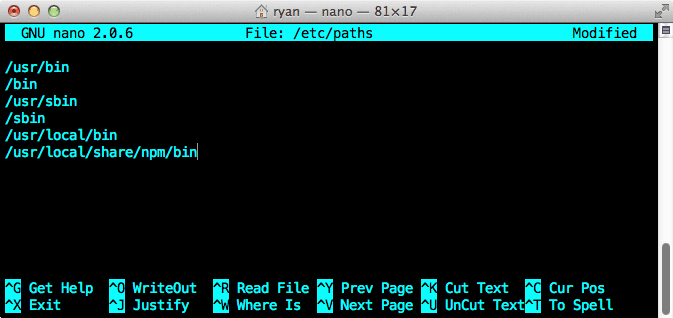
    Also I used this add bowtie2, bowtie or any other bioinformatic tools to Paths in OSX.


    If you have any advice on what is happening here and how to fix this to make FastQ screen work properly. I would really appreciate it.

    Thank you in advance,

    -Zapages

    Leave a comment:


  • simonandrews
    replied
    Sorry to get to this late - have been away from internet access for a week so am still catching up.

    Without seeing your files it's difficult to know why they might not be mapping. The first suspicion with any paired end files is that there's a problem with the pairing in your data. Could you try running the screen with just one of your files and remove the --paired option. Depending on whether that gives any hits will determine where you next look for problems.

    Leave a comment:


  • Zapages
    replied
    Thank you GenoMax. That worked perfectly. So whatever I name the bowtie1/2 index database should be the name used for the database location at the end. I will definitely remember that.

    I have tested two sets out. In my first set, I know sequence belongs to what I am providing for the database, but I get everything as Unmapped. This is strange, is there I am doing something wrong?

    The bowtie1/2 index were made using bowtie-build of the reference genome found on NCBI.

    In other sample, there was an Arabidopsis contamination (somewhere between 2 to 0.2%) and I am trying to remove the regions that are not infected by using the --nohits option.

    The same thing occurred with everything came back as Unmapped, which is strange.

    Should be good version:
    Code:
    fastq_screen --threads 8 --aligner bowtie2 --conf=/Users/ZainA/Downloads/Dmel_520/Dmel5_20.conf --paired /Users/ZainA/Downloads/Dmel_520/forward.fastq /Users/ZainA/Downloads/Dmel_520/reverse.fastq --outdir Output
    Contamination version:
    Code:
    fastq_screen --threads 8 --aligner bowtie2 --conf=/Users/ZainA/Downloads/Dmel_520/Arabidopsis/Arabidopsis_gnomon_mRNA.conf --paired /Users/ZainA/Downloads/Dmel_520/Arabidopsis/forward_1p3.fastq /Users/ZainA/Downloads/Dmel_520/Arabidopsis/reverse_2p3.fastq --nohits --outdir output
    Any ideas what is occurring and why is everything coming back unmapped?

    EDIT: Is there method to filter out reads that actually match to a certain genome/s as one or separate files (paired end or single end reads- fastq).
    Last edited by Zapages; 08-08-2014, 08:17 AM.

    Leave a comment:


  • GenoMax
    replied
    You appear to be using the directory as base names for the database in the config file. Your bowtie2 index base name as indicated by your command line for bowtie2-build is "reference_index_bowtie2", so the conf file should have this line
    Code:
    DATABASE Dmel520_Bowtie2 /Users/ZainA/Downloads/Dmel_520/Genomes/Dmel520_Bowtie2/reference_index_bowtie2 BOWTIE2
    This assumes that your index files for bowtie2 are in "/Users/ZainA/Downloads/Dmel_520/Genomes/Dmel520_Bowtie2/" directory. If they are not there then replace with appropriate path.

    Leave a comment:


  • Zapages
    replied
    I am trying to run this on OSX Mountain Lion. I don't think yum will work on it. The other command generates the same error as before to get GD::Graph to work.

    I tried to rearrange the configuration file as close to example version. Unfortunately, I still get this error.

    I used the following to build the index database for my reference genome.

    Code:
    bowtie2-build reference.fasta reference_index_bowtie2
    and
    Code:
    bowtie-build  reference.fasta reference_index_bowtie
    My configuration file looks like this:

    Code:
    BOWTIE /Users/ZainA/Downloads/bowtie-1.1.0
    BOWTIE2 /Users/ZainA/Downloads/bowtie2-2.2.3
    
    ##Dmel_5_20 - sequences available from
    /Users/ZainA/Downloads/Dmel_520/dmel-all-chromosome-r5.20.fasta
    
    DATABASE Dmel520_Bowtie /Users/ZainA/Downloads/Dmel_520/Genomes/Dmel520_Bowtie BOWTIE
    DATABASE Dmel520_Bowtie2 /Users/ZainA/Downloads/Dmel_520/Genomes/Dmel520_Bowtie2 BOWTIE2
    The output error for the following command is like this:

    Code:
    Dmel_520 ZainA$ fastq_screen --threads 8 --aligner bowtie2 --conf=/Users/ZainA/Downloads/Dmel_520/Dmel5_20.conf --outdir /Output --paired /Users/ZainA/Downloads/Dmel_520/forward.fastq /Users/ZainA/Downloads/Dmel_520/reverse.fastq
    The error:
    Code:
    Using fastq_screen v0.4.4
    Reading configuration from '/Users/ZainA/Downloads/Dmel_520/Dmel5_20.conf'
    Using '/Users/ZainA/Downloads/bowtie2-2.2.3' as bowtie2 path
    Skipping DATABASE 'Dmel520_Bowtie2' since no bowtie index was found at '/Users/ZainA/Downloads/Dmel_520/Genomes/Dmel520_Bowtie2'
    No search libraries were configured at /Users/ZainA/Downloads/fastq_screen_v0.4.4/fastq_screen line 124.
    If you could kindly help. I would really appreciate it.
    Thank you in advance.

    Leave a comment:


  • simonandrews
    replied
    The reason it's saying that you don't have any libraries configured is that you're specifying that you should use bowtie2, but your library isn't marked as a bowtie2 library in your config file. Have a look at the example config file we ship with the distribution to see what the syntax looks like.

    For GD graph - you didn't say what OS you were using. Assuming some type of linux, the easiest way is to install it from your package repository. On CentOS/Fedora I'd do:

    yum install perl-GD-Graph

    ..but there's likely to be something similar on whatever OS you're using.

    If that's not an option then using the perl CPAN module is the next easiest way:

    perl -MCPAN -e 'install GD::Graph'

    Hope this helps

    Leave a comment:


  • Zapages
    replied
    I actually built the index offline on my laptop (OSX) using bowtie2-build genome.fasta genome_index_bowtie2 . Previously, I was using the bowtie2 index made from iPlant. Unfortunately, I still received the same error as before.

    Code:
    fastq_screen --threads 8 --aligner bowtie2 --conf=/Users/ZainA/Downloads/Dmel_520/Dmel5_20.conf --outdir /Output --paired /Users/ZainA/Downloads/Dmel_520/S4A15_SRR070422_1p.fastq /Users/ZainA/Downloads/Dmel_520/S4A15_SRR070422_2p.fastq 
    Using fastq_screen v0.4.4
    Reading configuration from '/Users/ZainA/Downloads/Dmel_520/Dmel5_20.conf'
    Using '/Users/ZainA/Downloads/bowtie2-2.2.3' as bowtie2 path
    No search libraries were configured at /Users/ZainA/Downloads/fastq_screen_v0.4.4/fastq_screen line 124.
    As for GD:Graph,

    I get the following error:

    Code:
    Warning: prerequisite GD 1.18 not found.
    Warning: prerequisite GD::Text 0.80 not found.
    only nested arrays of non-refs are supported at /System/Library/Perl/5.12/ExtUtils/MakeMaker.pm line 664
    Warning: No success on command[/usr/bin/perl Makefile.PL]
    'YAML' not installed, will not store persistent state
      RUZ/GDGraph-1.48.tar.gz
      /usr/bin/perl Makefile.PL -- NOT OK
    Running make test
      Make had some problems, won't test
    Running make install
      Make had some problems, won't install
    How should I go about this. Thank you for the help in advance.

    Leave a comment:


  • SES
    replied
    You can install GD::Graph with the CPAN shell (you might need 'sudo' depending on your set up):
    Code:
    perl -MCPAN -e 'install GD::Graph'
    For the Fastq_screen issue, make sure your database is indexed with bowie build before running the program (it's not clear if that is the case).

    Leave a comment:


  • Zapages
    replied
    Hi Simon, I am testing this application and I get the following error: No search libraries were configured at /Users/ZainA/Downloads/fastq_screen_v0.4.4/fastq_screen line 124

    Code:
    --threads 8 --aligner bowtie2 --conf=/Users/ZainA/Downloads/Dmel_520/Dmel5_20.conf --outdir /Output --paired /Users/ZainA/Downloads/Dmel_520/forward_1p.fastq /Users/ZainA/Downloads/Dmel_520/reverse_2p.fastq
    My configuration file looks like this:

    Code:
    BOWTIE /Users/ZainA/Downloads/bowtie-1.1.0
    BOWTIE2 /Users/ZainA/Downloads/bowtie2-2.2.3
    
    ##Drosophila Genome 5.20
    /Users/ZainA/Downloads/Dmel_520/dmel-all-chromosome-r5.20.fasta
    
    DATABASE Dmel_5_20 /Users/ZainA/Downloads/Dmel_520/genome
    If you could kindly help me. I would greatly appreciate it.

    Also what is the easiest method to install GD:Graph.

    Thank you in advance.

    Leave a comment:


  • fireant
    replied
    I also ran the wc -l command and the the file sets are identical in line number
    1_CATTTT_L003_R1_001.fastq.cor.pair_1.fq = 132282576
    1_CATTTT_L003_R1_001.fastq.cor.pair_1.fq_screen.txt_no_hits.txt = 132282576
    The other odd thing is that I processed 8 sets of paired end reads and the last R2 of the files processed actually tripled in size.... from 11382611519 to 34147834557

    Any advice?

    Nathan
    Last edited by fireant; 03-11-2014, 07:22 AM.

    Leave a comment:

Latest Articles

Collapse

  • SEQadmin2
    Multiomic Liquid Biopsy: What DNA/RNA Panels Reveal That DNA Alone Can’t
    by SEQadmin2


    Tumors contain complex mixtures of cell populations that evolve in response to treatment and host-specific factors. Tissue biopsies provide only static snapshots of a tumor’s state. But what if we could follow that evolution over time using a minimally invasive technique?

    Liquid biopsies can detect tumor-derived material circulating in the bloodstream, providing a way to study treatment response, detect emerging resistance, and discover new biomarkers. Circulating
    ...
    10-14-2026, 09:55 AM
  • SEQadmin2
    New Genomics Technologies Take Aim at Long-Standing Limits
    by SEQadmin2


    Researchers using sequencing and genomics tools often have to make trade-offs. They can choose between speed or scale, short reads or long-range information, or targeted panels or a view of the whole transcriptome. New technologies that have been released this year are built to address those tough choices.

    We asked six companies the same four questions to learn about their latest products. The new technologies bring a lot to the table, including rethinking sequencing
    ...
    09-28-2026, 10:25 AM

ad_right_rmr

Collapse

News

Collapse

Topics Statistics Last Post
Started by SEQadmin2, Yesterday, 11:13 AM
0 responses
17 views
0 reactions
Last Post SEQadmin2  
Started by SEQadmin2, Yesterday, 10:48 AM
0 responses
18 views
0 reactions
Last Post SEQadmin2  
Started by SEQadmin2, 10-15-2026, 10:52 AM
0 responses
36 views
0 reactions
Last Post SEQadmin2  
Started by SEQadmin2, 10-14-2026, 05:39 AM
0 responses
42 views
0 reactions
Last Post SEQadmin2  
Working...