Unconfigured Ad

Collapse
X
 
  • Time
  • Show
Clear All
new posts
  • didymos
    Junior Member
    • Jun 2010
    • 8

    #1

    HeLa cell genome

    Hi All!

    I am wondering if there are any plans to resequence HeLa cell line?
    I know that there is the Cancer Genome Project, but I have not found any info about resequencing HeLa.
    Actually this is for me very strange because a lot of people work with this cell line, but we have no idea (as far as I know) how it genome looks like...
    It would be very cool to see how this cell line differs from hg19.
    Do you know anything more about HeLa genome (sequence)?
    thanks!
  • Joann
    Senior Member
    • Oct 2008
    • 230

    #2
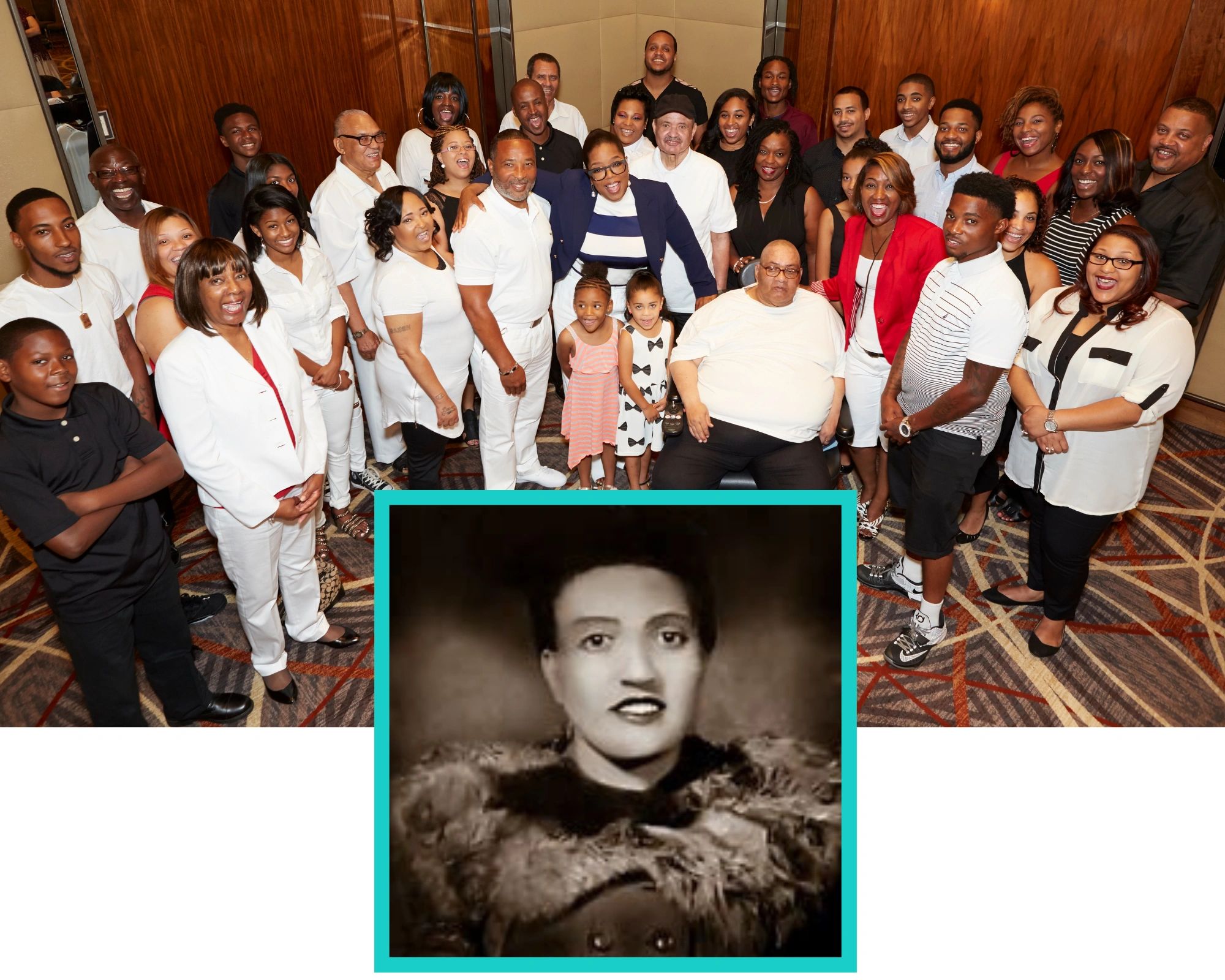
    Scientists know her as HeLa but her name was Henrietta Lacks

    You may be interested in reading about recent updates on the Lacks family.
    The Lacks Family continues to spread the good news: Henrietta Lacks' story and legacy. The Lacks Family raises awareness and encourages action to problems.


    And more about a recently established foundation

    Comment

    • tonybolger
      Senior Member
      • Feb 2010
      • 156

      #3
      Originally posted by didymos View Post
      I am wondering if there are any plans to resequence HeLa cell line?
      I would guess all the duplications would make it rather challenging, aka expensive, to do a complete genome, but finding interesting CNVs and SNPs should be possible.

      Comment

      • arolfe
        Member
        • Jul 2011
        • 29

        #4
        The ENCODE project used HeLa cells, among others. You could try doing an assembly from the chip-seq, rna-seq, and control datasets they've published. It'd probably be fragmented, but you might be able to detect interesting features.

        Comment

        • Joann
          Senior Member
          • Oct 2008
          • 230

          #5
          The Genomic and Transcriptomic Landscape of a HeLa Cell Line

          Published Early Online March 11, 2013, doi: 10.1534/g3.113.005777

          Detailed genomic and transcriptomic characterization of a HeLa cell line.

          Lars M. Steinmetz, corresponding author.

          Thank you Lars and all of the authors for publishing this paper.

          Comment

          • Joann
            Senior Member
            • Oct 2008
            • 230

            #6
            The Henrietta Lacks family leads the way

            The US NIH has announced an agreement with the descendants of Henrietta Lacks regarding the access to her cells' sequenced whole genome.

            see
            doi:10.1038/500141a

            also


            Previous discussions on this forum, and in particular, "Can we sequence the Y Chromosome?" and post #13 there "Future Repositories and Standards Bodies: Guidelines" discuss stardards for genealogy sequence repositories that would encompass relevant historical archives formats.

            I would like to note the similarity between the oversight format agreed upon by the Lacks family and NIH (application review and approval by a research oversight committee on behalf of the repository insitution) and the standards for permission for research use of archived medical records housed at the Alan Mason Chesney Medical Archives of The Johns Hopkins Medical Institutions.

            For more information please consult the book:
            Designing archival programs to advance knowledge in the health fields.
            see pp.132-22
            Edited by Nancy McCall and Lisa Mix
            Johns Hopkins University Press 1995
            ISBN 0801847613

            Comment

            Latest Articles

            Collapse

            • SEQadmin2
              Beyond CRISPR/Cas9: Understand, Choose, and Use the Right Genome Editing Tool
              by SEQadmin2


              CRISPR/Cas9 sparked the gene editing revolution for both research and therapeutics.1 But this system still showed severe issues that limited its applications. The most prominent were the heavy reliance on PAM sequences, delivery limitations, double-stranded breaks that prompt unintended edits and cell death, and editing inefficiency (both in targeting and in knock-in reliability).

              Despite this, “CRISPR helped turn genome editing from a specialized technique into
              ...
              07-31-2026, 11:01 AM
            • SEQadmin2
              Proteomic Platforms: How to Choose the Right Analytical Strategy to Improve Detection and Clinical Applications
              by SEQadmin2


              Proteomics platforms are evolving rapidly, with advances in mass spectrometry and affinity-based approaches expanding what researchers can detect and at what scale. As the field moves toward deeper proteome coverage and clinical applications, scientists face an increasingly complex landscape of tools. This article will explore how researchers are navigating these choices to find the right platform for their work.

              The systematic characterization of the human proteome has
              ...
              07-20-2026, 11:48 AM

            ad_right_rmr

            Collapse

            News

            Collapse

            Topics Statistics Last Post
            Started by SEQadmin2, 08-06-2026, 07:41 AM
            0 responses
            23 views
            0 reactions
            Last Post SEQadmin2  
            Started by SEQadmin2, 08-03-2026, 10:13 AM
            0 responses
            37 views
            0 reactions
            Last Post SEQadmin2  
            Started by SEQadmin2, 07-31-2026, 02:55 AM
            0 responses
            43 views
            0 reactions
            Last Post SEQadmin2  
            Started by SEQadmin2, 07-24-2026, 12:17 PM
            0 responses
            26 views
            0 reactions
            Last Post SEQadmin2  
            Working...