-
Thanks for information. Is there a special protocol for preparing libraries from cffDNA and is this protocol include shearing DNA after extraction or cffDNA is ready to use as it is (200 bp fragments ).? -
Yes, CATS is particularly suitable for circulating DNA including cffDNA. We routinely prepare libraries from 50-100 pg of cell-free plasma DNA. Moreover, it is the only method so far that captures single-stranded DNA efficiently (large % of cell-free DNA could be ssDNA)Originally posted by sequencingfan View PostLeave a comment:
-
Hi,
is Your product suitable for cff DNA form maternal blood?Leave a comment:
-
The template switching activity of MMLV-RT enzyme on RNA templates has been discovered and published by scientists from Clontech about 15 years ago [Matz et al, 1999 // Nucl Acid Res], and is utilized in their commercial kits for NGS.Originally posted by HeidelbergScience View Post
In [Turchinovich et al, 2014 // RNA Biology], the authors demonstrated for the first time that MMLV-RT can mediate template switching not only on RNA but also on DNA templates with the same efficacy, and have described a method, named CATS, that utilizes the switching in combination with polyA or poly(dA) tailing to generate libraries for Illumina NGS platform.
The DNA SMART ChIP-Seq Kit, which has been launched in Sept. 2014 by Clontech, has been developed independently from CATS published in [Turchinovich et al, 2014 // RNA Biology]; however, both methods uses template switching activity of MMLV-RT in combination with polydA-tailing for DNA. Likewise, different kits and methods which use RNA and DNA adapters ligation steps are usually not "virtually identical".
Importantly, CATS is a universal protocol for RNA or DNA, its workflow is significantly different from DNA SMART ChIP-Seq, and described in details. Finally, the efficacy, sensitivity and quality of CATS and DNA SMART ChIP-Seq Kit has not been yet compared.Last edited by HeidelbergScience; 10-15-2014, 04:53 AM.Leave a comment:
-
CATS protocol (for Illumina)
Primers:
TSO: Biotin-5’-gtt cag agt tct aca gtc cga cga tc rGrGrG, where rG = riboguanidine
IPdTDPo: 5’-aga cgt gtg ctc ttc cga tct tttttttttt tttttttttt ttttttttt v, where v = a+g+c
PCRf: 5’-aat gat acg gcg acc acc gag atc tac acg ttc aga gtt cta cag tcc ga
PCRr : 5’-caa gca gaa gac ggc ata cga gat cgt gat gtg act gga gtt cag acg tgt gct ctt ccg atct
Illumina Custom Sequencing Primer: 5’-gtt cag agt tct aca gtc cga cga tcg gg
Reagents
E. coli Poly(A) Polymerase (NEB) + ATP (included in the kit)
Terminal Transferase (NEB) + dATP (have to buy separately)
T4 Polynucleotide Kinase (NEB)
SMARTScribe Reverse Transcriptase (Clontech)

Recombinant Ribonuclease Inhibitor (Clontech)

dNTP Mix = 10 mM each dNTP (e.g. from Clontech)
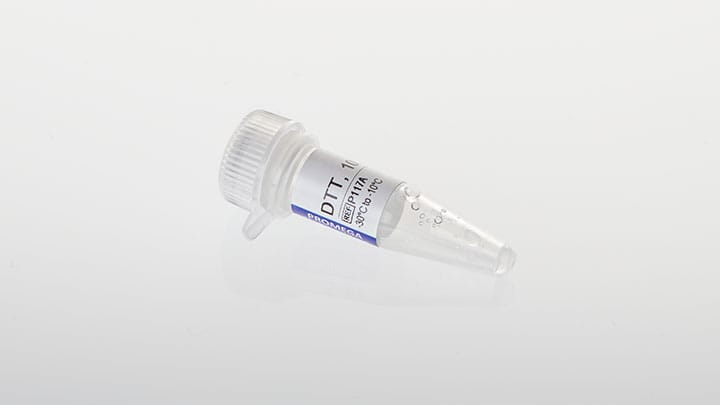
DTT 100mM (RNAse free!!!) (e.g. from Promega)
Taq PCR Master Mix Kit (Qiagen)
AMPure XP Beads (Beckman Coulter)
https://www.neb.com/protocols/1/01/0...xp-beads-e7330
Optional reagents for gel-purification of DNA libraries instead of AMPure XP Beads purification
E-Gel® EX Agarose Gels, 4% (Life Technologies)

QIAquick PCR Purification Kit (Qiagen)
MinElute Gel Extraction Kit (Qiagen)
Protocol
[IMPORTANT]. This protocol is optimized and tested only for 1 pg/µL - 10 ng/µL (final concentration in polyA / polydA tailing reaction) of RNA and DNA amounts. When using higher inputs (>10 ng/µL), additional optimization might be necessary (e.g. ATP/dATP concentration, primers concentration, incubation times)
Step A (Tailing)
For RNA: 16 µL of RNA (1 pg/µL – 5 ng/µL) + 2 µL 10x PAP buffer + [0.5 µL T4 PNK → 5 min 37°C]* + 2 µL 1 mM ATP + 0.5 µL PAP (E.Coli) → 10 min 37°C + 20 min 65°C. Final [ATP] must not be more or less than 0.1 mM when using 1 pg/µL – 5 ng/µL RNA! When using 10 ng/µL RNA use 0.2 mM final [ATP].
* T4 PNK treatment is required only if RNA contains 3’-phosphates/cyclophosphates (e.g. after Mg2+ fragmentation or nuclease treatment). Heat inactivation of T4 PNK is not necessary.
For dsDNA: 16 µL of DNA (1 pg/µL – 5 ng/µL) + 2 µL 10x Terminal Transferase buffer → 2 min 95°C → fast cool on ice + [0.5 µL T4 PNK → 5 min 37°C]* → + 2 µL 1 mM (for 1-5 ng/µL DNA) or 0.1 mM dATP (for 1-10 pg/µL DNA) + 0.5 µL Terminal Transferase → 15 min 37°C+20 min 70°C. !The final concentration of dATP should be changed approximately linearly depending on DNA amount! When using 10 ng/µL DNA use 1 mM final [dATP].
For ssDNA: the same way, but the denaturation step is not necessary.
* T4 PNK treatment is required only if DNA contains 3’-phosphates (e.g. after sonication half of DNAs contain 3’-phosphate). Heat inactivation of T4 PNK is not necessary.
Step B (RT and template switching)
1) 2 µL of RNA/DNA from poly(A)/(dA) reaction* + 2 µL (1 µM – 10 nM) IPdTDPo primer + 5 µL of 1x RT buffer (or 5 µL of 16% DMSO in 1x RT buffer) → 2 min 72°C + 2 min 42°C.
The molarity of IPdTDPo primers must be approximately proportional to the molarity of the poly(A)/(dA) tails Therefore, use 1 µM of IPdTDPo solution (100 nM final) for 1 ng-range of DNA/RNA, 100 nM (10 nM final) for 100 pg-range DNA/RNA and 10 nM (1 nM final) for 5-pg range DNA/RNA.
If the amount of RNA or DNA in the poly(A)/(dA) reaction was 10 - 100 ng/µL use 10 µM (1 µM final) IPdTDPo. DO NOT use IPdTDPo at more than 1 µM final concentration!
Up to 7 µL of poly(dA)-tailed DNA can be used per 20 µL RT reaction. However DO NOT use more than 2 µL (10 % of final RT volume) of poly(A)-tailed RNA per RT reaction! That is due to the fact that PAR buffer (but not Terminal Transferase buffer), contains high concentrations of NaCl which is critical for even poly(A) tailing of RNA but at too high final concentration NaCl will induce premature template switch.
*- poly(dA)-tailed DNA/RNA from 20 - 100 µL of tailing reaction can be precipitated (by adding 5 µg of Linear polyacrylamide, 0.1V NaAc (PH 5.3) and 4V of EtOH), centrifuged and dissolved in a smaller volume (e.g. in 7 µL of 1x RT Buffer) and used completely for the RT reaction. DO NOT add more than 5 µg of linear polyacrylamide! Importantly, PAP and T4 PNK enzymes contain trace amounts of short DNA and RNA and will also be in the precipitates. Therefore, the presence of short nucleic acids in the enzymes may provide fundamental limit of the method sensitivity. Development of more clean enzymes will solve this problem in the future.
[UPDATE] Picogram amounts of Poly(dA)-tailed DNA from 20 - 100 µL tailing reaction can be concentrated to 8 µL with almost 100% efficacy by column purification system included in MethylEdge™ Bisulfite Conversion kit (Promega, N1301); and taken completely for RT reaction: 8 µL eluate + 1 µL 5xRT buffer + 1 µL IPdTDPo (10 - 0,01 µM) → 2 min 72°C + 2 min 42°C.
2) Prepare RT master mix in a separate tube: 4 µL 5xRT buffer + 2 µL dNTP (10 mM each) + 2 µL SMARTScribe Reverse Transcriptase + 0.5 µL RNAse inhibitor + 0.5 µL DTT (100 mM). Scale master mix solution accordingly depending on the number of samples. Master mix can be frozen an stored for ∞.
3) Add 9 µL of master mix to 9 µL of sample/IPdTDPo, mix by pipetting → 15 min 42°C → add 2 µL of 10 µM TSO, mix by pipetting → 15 min - 2 hours 42°C + 10 min 70°C. DO NOT change the concentration of TSO when using different amounts of DNA/RNA, its final concentration should always be 1 µM. [UPDATE]: Incubating the reaction for 2 hours with TSO increases the yield of the library 5-10 times as compared to 15 min (appears 3 PCR cycles earlier on gel).
Step C (Amplification)
20 µL of RT reaction + 50 µL 2x Taq PCR Master Mix + 10 µL PCRf primer (10 µM) + 10 µL PCRr primer (10 µM) + 10 µL water → PCR: 1) 30 sec 94°C; (2) 15 sec 94°C; (3) 30 sec 62°C; (4) 30 sec 70°C; Go to step (2) for 13 – 23 cycles. Use 13 PCR cycles for 1 ng RNA/DNA and 23 PCR cycles for 5 pg RNA/DNA.
Note that, PCRf = NEBNext Universal PCR Primer for Illumina
Indexes for multiplexing can be incorporated into PCRr primer = NEBNext Index 1 Primer for Illumina
Other Indexed primers sequences can be found here:
https://www.neb.com/~/media/Catalog/...anualE7335.pdf
It is not necessary to use phosphorothioate bonds in the PCRf and PCRr.
Step D (Purification)
1) Run 20 µL of PCR reaction on agarose gel to examine library quality, fragments size distribution and the presence of the “empty” libraries (peak of about 150 bp size)
2) Purify DNA library with AMPure XP Beads (Beckman Coulter) if size selection is not required.
3) Purify DNA library by gel extraction after running on 4% E-Gel® EX Agarose Gels if size selection is necessary using MinElute Gel Extraction Kit (Qiagen). Melt the gel at 37°C (about 5-10 min)!!! DO NOT heat until 65°C as the protocol says, overwise the libraries would be denatured and it will be impossible to analyze them by Agilent Bioanalyser. Before loading on E-Gel® EX Agarose Gels PCR mix must be desalted by column purification by using e.g. QIAquick PCR Purification Kit (Qiagen).
4) Quantify the DNA library and estimate average size by Qubit and Bioanalyser before loading on MiSeq/HiSeq. Use Illumina Custom Sequencing Primer for Read 1.
[UPDATE]. If the final libraries were purified from 4% E-gel, the use of Agilent Bioanalyser is not necessary (only Qubit is enough for the QC), as the 4% E-gels are enough for estimating the average peak size of the DNA libraries.Last edited by HeidelbergScience; 01-23-2015, 02:55 AM.Leave a comment:
-
This is virtually identical to http://www.clontech.com/US/Products/..._Kits/ChIP-Seq. Are you licensing the technology to them or what's going on here?Originally posted by HeidelbergScience View PostLeave a comment:
-
Thanks a lot for pointing me to this beautiful paper. The completeness of the supplementary information is exceptional.Leave a comment:
-
CATS - a novel library preparation protocol
Dear Colleagues,
We would like to draw your attention to the newly developed method for NGS libraries preparation from low and ultra-low amounts of fragmented RNA and DNA.
This method, named CATS, would be particularly valuable for ChIP, RIP experiments, as well as miRNA and circulating DNA. It also can be applied to long DNA(RNA) after fragmentation (e.g. sonication, Mg2+ or nuclease treatment).
Importantly, CATS procedure is as easy, and as cheap as a conventional RT-PCR experiment and allows generation of NGS libraries from low inputs with unprecedented complexity.
http://www.tandfonline.com/doi/full/10.4161/rna.29304
All questions regarding the method can be asked here.Last edited by HeidelbergScience; 11-11-2016, 03:52 AM.





-
Tumors contain complex mixtures of cell populations that evolve in response to treatment and host-specific factors. Tissue biopsies provide only static snapshots of a tumor’s state. But what if we could follow that evolution over time using a minimally invasive technique?
Liquid biopsies can detect tumor-derived material circulating in the bloodstream, providing a way to study treatment response, detect emerging resistance, and discover new biomarkers. Circulating...10-14-2026, 09:55 AM -
Researchers using sequencing and genomics tools often have to make trade-offs. They can choose between speed or scale, short reads or long-range information, or targeted panels or a view of the whole transcriptome. New technologies that have been released this year are built to address those tough choices.
We asked six companies the same four questions to learn about their latest products. The new technologies bring a lot to the table, including rethinking sequencing...
Leave a comment: