Unconfigured Ad

Collapse
X
 
  • Time
  • Show
Clear All
new posts
  • snz
    Junior Member
    • Jun 2013
    • 2

    #1

    Getting familiar with Sequencing

    Hi all,

    I wanted to get an idea about the field of next generation sequencing. More specifically I wanted to know:

    1. What are the major computational problems related to next-gen sequencing?
    2. Who are some of the notable computational biologists doing research on those problems?
    3. What is the goal of sequencing industries? Do they care about compact storage of reads only?
    4. What is the goal of biologists that deal with sequencing data?
  • colindaven
    Senior Member
    • Oct 2008
    • 417

    #2
    Homework ?

    Comment

    • snz
      Junior Member
      • Jun 2013
      • 2

      #3
      No, it's not.

      Comment

      • swbarnes2
        Senior Member
        • May 2008
        • 910

        #4
        You are unlikely to get anyone to answer a question like that.

        For starters, look at what you wrote, and calculate how long it looks like you spent on your problem trying to solve it yourself. I'd say, the post demonstrates about 30 seconds worth of effort. If you are asking people to spend 10x as long answering your question as you have spent trying to answer it, well, no one is going to do that.

        Comment

        • Joann
          Senior Member
          • Oct 2008
          • 230

          #5
          Visiting Washington DC this summer?

          There is a new free exhibit at the Smithsonian Museum of Natural History in Washington DC. You may also navigate the website of the exhibit and its links to find answers to your questions. Follow the links from

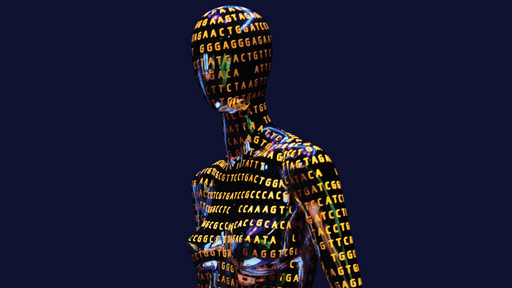
          The Genome: Unlocking Life's Code exhibition celebrates the 10th anniversary of the initial sequencing of the human genome.


          Additional information --About this exhibition's funding

          Funds for the Smithsonian-NHGRI exhibition and related initiatives were raised privately by both the Smithsonian National Museum of Natural History and the Foundation for the National Institutes of Health.

          Life Technologies Foundation, the philanthropic arm of Life Technologies Corp. of Carlsbad, Calif., has pledged $3 million to fund the production of the exhibition itself. Additionally, more than $500,000 has been raised through the Foundation for The National Institutes of Health, Bethesda, Md., and from the Brin Wojcicki Foundation of Palo Alto, Calif.; the Celgene Corporation of Summit, N.J.; Pacific Biosciences of Menlo Park, Calif., Pac Bio president and chief executive officer Mike Hunkapiller, Ph.D., and his wife Beth; the New England Biolabs of Ipswich, Mass.; and from Genentech, Inc. of South San Francisco, Calif.

          Comment

          Latest Articles

          Collapse

          • SEQadmin2
            Beyond CRISPR/Cas9: Understand, Choose, and Use the Right Genome Editing Tool
            by SEQadmin2


            CRISPR/Cas9 sparked the gene editing revolution for both research and therapeutics.1 But this system still showed severe issues that limited its applications. The most prominent were the heavy reliance on PAM sequences, delivery limitations, double-stranded breaks that prompt unintended edits and cell death, and editing inefficiency (both in targeting and in knock-in reliability).

            Despite this, “CRISPR helped turn genome editing from a specialized technique into
            ...
            07-31-2026, 11:01 AM
          • SEQadmin2
            Proteomic Platforms: How to Choose the Right Analytical Strategy to Improve Detection and Clinical Applications
            by SEQadmin2


            Proteomics platforms are evolving rapidly, with advances in mass spectrometry and affinity-based approaches expanding what researchers can detect and at what scale. As the field moves toward deeper proteome coverage and clinical applications, scientists face an increasingly complex landscape of tools. This article will explore how researchers are navigating these choices to find the right platform for their work.

            The systematic characterization of the human proteome has
            ...
            07-20-2026, 11:48 AM
          • SEQadmin2
            Advanced Sequencing Platforms Tackle Neuroscience’s Toughest Genomics Problems
            by SEQadmin2


            Genomics studies in neuroscience face a special challenge due to the brain’s complexity and scarcity of samples. Mapping changes in cell type and state using conventional next-generation sequencing methods remains challenging. Advances in technologies like single-cell sequencing, spatial transcriptomics, and long-read sequencing have opened the door to deeper studies of the brain and diseases like Alzheimer’s, amyotrophic lateral sclerosis (ALS), and schizophrenia.
            ...
            07-09-2026, 11:10 AM

          ad_right_rmr

          Collapse

          News

          Collapse

          Topics Statistics Last Post
          Started by SEQadmin2, Yesterday, 10:13 AM
          0 responses
          14 views
          0 reactions
          Last Post SEQadmin2  
          Started by SEQadmin2, 07-31-2026, 02:55 AM
          0 responses
          28 views
          0 reactions
          Last Post SEQadmin2  
          Started by SEQadmin2, 07-24-2026, 12:17 PM
          0 responses
          21 views
          0 reactions
          Last Post SEQadmin2  
          Started by SEQadmin2, 07-23-2026, 11:41 AM
          0 responses
          21 views
          0 reactions
          Last Post SEQadmin2  
          Working...