Unconfigured Ad

Collapse
X
 
  • Filter
  • Time
  • Show
Clear All
new posts
  • samour
    Junior Member
    • Jan 2017
    • 7

    Reaching out to bioinformatics enthusiasts

    We are a group of bioinformatics/genomics enthusiasts currently working on developing a streamlined platform for genomic analysis to be used in the research and healthcare community (for purposes of application in transnational medicine and basic science research). Our team consists of a biologist/progammer, engineer/programmer, and two MDs. The progress so far has been to develop a web-based demo to integrate the most commonly used bioinformatics tools into one platform with easy usability for the end user.

    The efforts are opensource and use open source tools. Our goal however is to polish or even create new tools that are unique to the developing market's needs. Ultimately, our platform would help the end user run through a modifiable pipeline that is tailored to the end user's needs.

    Our approach/focus is on:
    • Data handling (compression, and optimization for use on cloud-based application)
    • Data analysis (modifiable but within scope of most commonly used tools or technologies to study gene expression and other future prospects such as genome evolution and studies across multiple species/phylogenetics, pharmacogenetics, and proteomics)
    • Data visualization (interactive data output tailored to the end user's needs in terms focusing on usable results)

    Our team is currently in need of people with experience in:
    • Programming (Java, Python) - also looking into the possibility of integrating machine learning into such a platform.
    • Bioinformatics
    • Mathematics or data science/statistics (MATLAB, R; for purposes of data compression algorithm development and analysis)

    Again, our efforts are open source and serve the purpose of developing the end user experience in the research and healthcare world. Everyone on board is striving to learn more about the field during this endeavor. Our team members have varying levels of experience but are enthusiastic and continuing to show dedication to pushing the scientific community forward.

    Best,
    M Samour
    Teleogene LLC
  • gringer
    David Eccles (gringer)
    • May 2011
    • 845

    #2
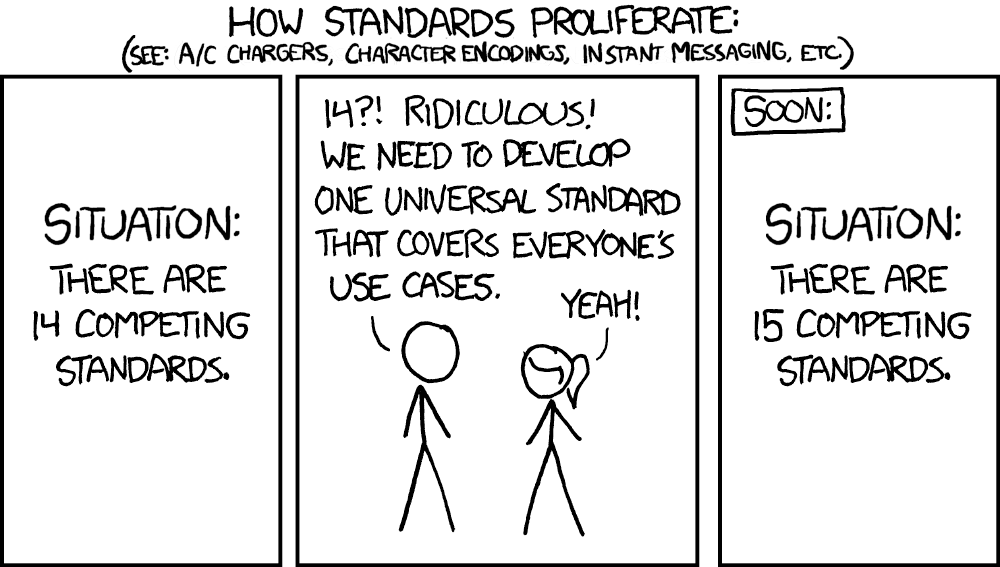
    Platforms like this for bioinformatics are all over the place. Please consider putting your efforts into improving one of the ones that already exists, rather than creating a new one:


    If you're not improving something that already exists you may get some interest, but chances are that most people will find something a little bit different about your solution that doesn't precisely fit their needs, and move on without mentioning their issues.

    Comment

    • samour
      Junior Member
      • Jan 2017
      • 7

      #3
      Thank you for taking the time to reply. I am aware of the multiple platforms available out there with similar approaches. However, I could not see any with the focus on making it available and usable for the masses. I understand that it can be difficult to believe such a need exists at the current time (as you mentioned, most would want pipelines that are tailored to their needs individually).

      I believe there is much to be improved on the current market. And yes I agree that the focus should be on improving current platforms. It is something we are looking into and most likely will steer that way after further exploration.

      As sequencing is becoming more affordable, the limiting factor of development will be of data handling, storage, and security. Again, this is just a general outlook with more details playing into the decision to develop such a platform.

      Best,

      Comment

      • gringer
        David Eccles (gringer)
        • May 2011
        • 845

        #4
        I could not see any with the focus on making it available and usable for the masses
        Pretty much every such platform has this focus. The point of creating an integrated toolkit is to make individual tools easier for less-skilled people to use. I don't have to look hard to find similar statements:

        The Galaxy Project: Data intensive biology for everyone.

        MPI Bioinformatics Toolkit: "The primary aim in developing the MPI Bioinformatics Toolkit was to offer a web service that is as easy to use as possible..."

        RobiNA: "RobiNA tries to bridge this gap by providing a flexible user friendly graphical interface to unleash the power of R/BioConductor for the individual biologist"

        Unipro UGENE: "Unipro UGENE is a multiplatform open-source software with the main goal of assisting molecular biologists without much expertise in bioinformatics to manage, analyze and visualize their data."

        ... or see the Wikipedia page on RNA-Seq tools.

        I understand that it can be difficult to believe such a need exists at the current time
        I agree that the need exists, I just think that there are more effective ways to address that need than trying to create something entirely new.

        Comment

        • samour
          Junior Member
          • Jan 2017
          • 7

          #5
          I completely agree with you. There is many available platforms which are redundant in some sense. I've looked through of those you've linked before. I somewhat agree with your analysis of the market but disagree on some points. What in your perspective is currently immensely lacking in the toolkits available to allow for a better usage of structured pipelines by commonplace biologist researchers for example?

          Either way, this is one of the reasons I wanted to reach out to people here with hands-on experience on the matter, to get a different perspective and also make sure non-redundancy is made in developing any platform (or at least minimal).

          Have you by any chance worked or are aware of EDGE bioinf? https://bioedge.lanl.gov/edge_ui/

          Comment

          • gringer
            David Eccles (gringer)
            • May 2011
            • 845

            #6
            Originally posted by samour View Post
            What in your perspective is currently immensely lacking in the toolkits available to allow for a better usage of structured pipelines by commonplace biologist researchers for example?
            Publicity / marketing.

            Have you by any chance worked or are aware of EDGE bioinf?
            I'm not sure. It looks to me quite similar to DNANexus, or possibly Galaxy, both of which I've used previously to access a specific dataset. I'm comfortable enough with the command line that toolkits like these slow me down more than help me, because I spend a lot of time trying to get my shoehorns to work.

            Comment

            • jiaco
              Member
              • May 2010
              • 35

              #7
              Originally posted by samour View Post
              What in your perspective is currently immensely lacking in the toolkits available to allow for a better usage of structured pipelines by commonplace biologist researchers for example?
              Curious if anyone on here agrees with me on this, but IMO what is needed is something that works both with and without GUI. If you want bioinformaticans to care, you cannot force them to touch the mouse. If you want biologists and mds to be able to use it, you cannot force them onto the command line.

              Development of another Galaxy is not at all what we need. Whatever you make, if it only works in a browser, power users will never touch it. These are also the potential developers, so having them actually want to use the platform, should help grow the platform. The holy grail here is to expose the power and flexibility of R scripting with a GUI. Thankfully, this is NOT just around the corner, so I will continue to have a job for the near future.

              Comment

              • dpryan
                Devon Ryan
                • Jul 2011
                • 3478

                #8
                There's no need for a single unified platform on the CLI and GUI (N.B., you can do this with Galaxy for the most part, but I wouldn't recommend it unless you have a very very good reason). For wet-lab folks, Galaxy works quite well and our more advanced users are able to transition to directly using R and jupyter since both are available from within Galaxy's interactive environments.

                The real glue between CLI and GUI is the common workflow language, which is increasingly supported by Galaxy. When I can write a cwl workflow and have it work on Galaxy and with snakemake then life will be wonderful. In fact, writing the snakemake glue for this would be a more productive use of your time.

                As an aside, bioinformaticians should be forced to do at least a few wet-lab experiments at some point in their life. Similarly, wet-lab folks should have at least a vague clue about data analysis, preferably with R (yes, I also teach our wet-lab folks R).

                Comment

                • samour
                  Junior Member
                  • Jan 2017
                  • 7

                  #9
                  Originally posted by gringer View Post
                  Publicity / marketing.
                  Agreed. I personally am focusing on this. I believe I have access to markets that are currently untapped and have potential for growth in certain aspects of healthcare (mostly international -meaning outside U.S.)


                  Originally posted by gringer View Post
                  I'm not sure. It looks to me quite similar to DNANexus, or possibly Galaxy, both of which I've used previously to access a specific dataset. I'm comfortable enough with the command line that toolkits like these slow me down more than help me, because I spend a lot of time trying to get my shoehorns to work.
                  That is completely fair and understandable. It is just about finding the right balance between all these variables. I am not proposing the ultimate fix-it-all solution with what I want to work on, but rather like you said, an improvement on what is available. Therefore, experience from people running the trends is valuable and should drive the development. As an MD, I am seeing this from the healthcare perspective and I do foresee the myriad applications for such technologies in the near future (my perspective might be flawed and missing out on a lot of important points, but is valid in its domain).

                  Again, there are many people cutting deep into developing these technologies without looking at the broader picture of applicability in healthcare or research. Any bioinformatician will see this idea as displeasing in its most rudimentary form and I can relate to that. The ultimate goal of the huge genomic efforts is to solve problems, and I see a huge lack in focus on bigger picture applications.

                  Comment

                  • samour
                    Junior Member
                    • Jan 2017
                    • 7

                    #10
                    Originally posted by jiaco View Post
                    Curious if anyone on here agrees with me on this, but IMO what is needed is something that works both with and without GUI. If you want bioinformaticans to care, you cannot force them to touch the mouse. If you want biologists and mds to be able to use it, you cannot force them onto the command line.

                    Development of another Galaxy is not at all what we need. Whatever you make, if it only works in a browser, power users will never touch it. These are also the potential developers, so having them actually want to use the platform, should help grow the platform. The holy grail here is to expose the power and flexibility of R scripting with a GUI. Thankfully, this is NOT just around the corner, so I will continue to have a job for the near future.
                    Another Galaxy is not what is needed. There is no need for more fragmentation, and no need for something as non-universal. Thinking about this in mass-use perspective (whether in healthcare or research), there needs to be compatibility and reproducibility with handling and visualizing data. The future will not be limited by how many technologies or ways we create that can handle genomic data. It will be about having the people involved in the process to be able to recognize patterns on mass-scale basis and identify the opportunities for disease identification, treatment, and scientific discoveries in general. The huge amount of data that will spawn from advancing sequencing technologies will need to be more governed. To me, as an MD with a humble experience in a wet-lab environment (as well as seeing average biology researchers in lab environment), the genomics world is a mess.

                    In summary, I am calling for an effort to classify and organize the handling of genomic data. The beauty of data is that it is relatively static, can be studied over and over. There is no need for a revolution for genomics if the way the community deals with genomic data in a very arbitrary way, letting all of the money and time spent to generate data go to waste. I can go on for hours about what I think is lacking in the field (again, this is from my humble perspective. I know a lot of it is obvious, but it seems it is not well stressed in most approaches to genomics today), but I will refrain from doing so to allow for a more dynamic discussion.

                    Also, I completely agree with the need for a GUI-based web-application with a non-GUI backend for developers or bioinformaticians/enthusiasts

                    Thanks!

                    Comment

                    • samour
                      Junior Member
                      • Jan 2017
                      • 7

                      #11
                      Originally posted by dpryan View Post
                      There's no need for a single unified platform on the CLI and GUI (N.B., you can do this with Galaxy for the most part, but I wouldn't recommend it unless you have a very very good reason). For wet-lab folks, Galaxy works quite well and our more advanced users are able to transition to directly using R and jupyter since both are available from within Galaxy's interactive environments.

                      The real glue between CLI and GUI is the common workflow language, which is increasingly supported by Galaxy. When I can write a cwl workflow and have it work on Galaxy and with snakemake then life will be wonderful. In fact, writing the snakemake glue for this would be a more productive use of your time.

                      As an aside, bioinformaticians should be forced to do at least a few wet-lab experiments at some point in their life. Similarly, wet-lab folks should have at least a vague clue about data analysis, preferably with R (yes, I also teach our wet-lab folks R).
                      This is inarguable. People need to know about the whole process and how it works even if in variable degrees. In more advanced labs you will have biologists who can deal with data using basic skills in bioinformatics. Some more adept than others. However, I think, just like when clinical research is done by MD's trying to do their own statistics, this could fail at any point.

                      Additionally, I have worked with biologists who collaborate with genomic cores for RNA-Seq analysis and other analyses, with zero understanding of what NGS is and how does it work. Again, this is not your high level genomics/biology lab studying the evolutionary tree of a specific species. It is your average biology wet-lab studying human disease.

                      I am also not sure how many wet-labs have access to their local or regional bioinformatics department.

                      I will take your advice, thanks!

                      Comment

                      • gringer
                        David Eccles (gringer)
                        • May 2011
                        • 845

                        #12
                        Be very careful about how you market this platform.

                        Under the minimum of something like a GNU license covering most of it; we’re not going to publish this to the public.... We do not communicate under unsafe avenues and will only provide this software to those willing to join in on this endeavor.
                        I see that you're developing this under a framework that is at least consistent with how GNU believes the GPL should be used, as long as everyone in the team (including toolkit users) shares this ideal of non-public release:


                        However, it feels to me like it goes against statements used in the opening post like "The efforts are opensource and use open source tools."

                        If you've starting out by generating a toolkit without public collaboration (and certainly if you intend to continue with that), there will be some bioinformaticians who will be put off by the closed nature of this project. Research is moving towards being more open, because it tends to be easier and work better that way:


                        As I've already mentioned, I'm not likely to use your platform because I've been burned too much by "kitchen sink" platforms previously, nor am I interested in helping with development of this. You have exposed additional concerns about freedom and openness that I didn't previously have, but these concerns may not apply to your target users (or developers). It would be a good idea to determine if that is the case before trying to expand your user/developer base.

                        Comment

                        • gringer
                          David Eccles (gringer)
                          • May 2011
                          • 845

                          #13
                          I am not reassured (or more correctly, not assured) by this clarification. The opposite, really. Patents shouldn't be anywhere near software, particularly not when it is used on a general-purpose computing device.

                          Comment

                          • samour
                            Junior Member
                            • Jan 2017
                            • 7

                            #14
                            Originally posted by gringer View Post
                            Be very careful about how you market this platform.


                            I see that you're developing this under a framework that is at least consistent with how GNU believes the GPL should be used, as long as everyone in the team (including toolkit users) shares this ideal of non-public release:


                            However, it feels to me like it goes against statements used in the opening post like "The efforts are opensource and use open source tools."

                            If you've starting out by generating a toolkit without public collaboration (and certainly if you intend to continue with that), there will be some bioinformaticians who will be put off by the closed nature of this project. Research is moving towards being more open, because it tends to be easier and work better that way:


                            As I've already mentioned, I'm not likely to use your platform because I've been burned too much by "kitchen sink" platforms previously, nor am I interested in helping with development of this. You have exposed additional concerns about freedom and openness that I didn't previously have, but these concerns may not apply to your target users (or developers). It would be a good idea to determine if that is the case before trying to expand your user/developer base.
                            The effort is ultimately open source. The current work is however limited to a team (For reasons of better communication and getting ideas across within the framework that is believed to be most desirable to the users). We are in no position to limit ourselves yet. The market is being explored and our work will be tailored to the needs. There is no advancement without openness to allow for faults and ideas to get through to us.

                            Thanks again,

                            Comment

                            • HESmith
                              Senior Member
                              • Oct 2009
                              • 512

                              #15
                              @SDos, given your concern about security, do you really expect any of us on this forum to click on blind links posted by an essentially anonymous individual?

                              Comment

                              Latest Articles

                              Collapse

                              • SEQadmin2
                                Proteomic Platforms: How to Choose the Right Analytical Strategy to Improve Detection and Clinical Applications
                                by SEQadmin2


                                Proteomics platforms are evolving rapidly, with advances in mass spectrometry and affinity-based approaches expanding what researchers can detect and at what scale. As the field moves toward deeper proteome coverage and clinical applications, scientists face an increasingly complex landscape of tools. This article will explore how researchers are navigating these choices to find the right platform for their work.

                                The systematic characterization of the human proteome has
                                ...
                                Today, 11:48 AM
                              • SEQadmin2
                                Advanced Sequencing Platforms Tackle Neuroscience’s Toughest Genomics Problems
                                by SEQadmin2


                                Genomics studies in neuroscience face a special challenge due to the brain’s complexity and scarcity of samples. Mapping changes in cell type and state using conventional next-generation sequencing methods remains challenging. Advances in technologies like single-cell sequencing, spatial transcriptomics, and long-read sequencing have opened the door to deeper studies of the brain and diseases like Alzheimer’s, amyotrophic lateral sclerosis (ALS), and schizophrenia.
                                ...
                                07-09-2026, 11:10 AM
                              • SEQadmin2
                                Cancer Drug Resistance: The Lingering Barrier to Rising Survival
                                by SEQadmin2


                                Cancer survival rates have significantly increased in the last few decades in the United States, reaching a combined 70% 5-year survival rate by 2021. Behind this number, there are years of research to find new therapies, drug targets, and early detection methods. But there is one core challenge that keeps slowing down these advances, and it’s about drug resistance.

                                There is no single reason why many patients don’t respond to treatment as expected. Cancer is...
                                07-08-2026, 05:17 AM

                              ad_right_rmr

                              Collapse

                              News

                              Collapse

                              Topics Statistics Last Post
                              Started by SEQadmin2, Today, 11:10 AM
                              0 responses
                              7 views
                              0 reactions
                              Last Post SEQadmin2  
                              Started by SEQadmin2, 07-13-2026, 10:26 AM
                              0 responses
                              29 views
                              0 reactions
                              Last Post SEQadmin2  
                              Started by SEQadmin2, 07-09-2026, 10:04 AM
                              0 responses
                              38 views
                              0 reactions
                              Last Post SEQadmin2  
                              Started by SEQadmin2, 07-08-2026, 10:08 AM
                              0 responses
                              25 views
                              0 reactions
                              Last Post SEQadmin2  
                              Working...